
Get 24/7 Emergency Towing Assistance
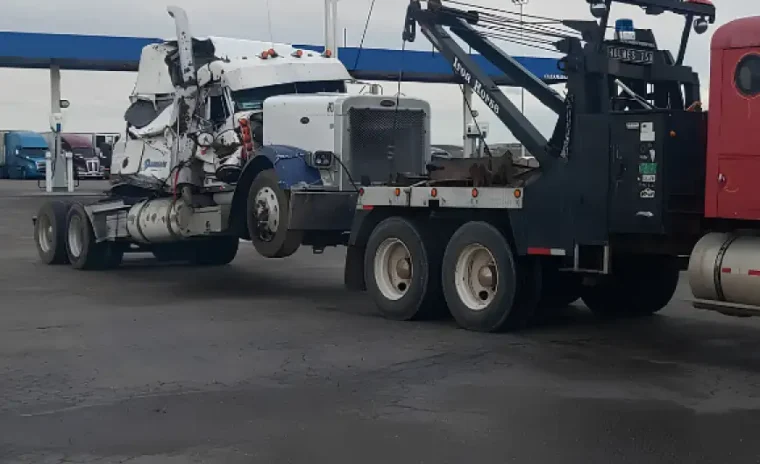
Understanding Heavy Duty Towing Fundamentals
Heavy duty towing represents a specialized tier of vehicle recovery designed for loads exceeding 26,000 pounds—well beyond what standard light-duty or medium-duty equipment can safely manage. This category includes semi-trucks, commercial buses, construction equipment, RVs, and large agricultural machinery. In rural Idaho, where farming and ranching operations rely on substantial equipment year-round, the distinction between light and heavy duty becomes critical when a fully loaded grain truck breaks down during harvest season or a cattle trailer jackknifes on icy winter roads.
Weight classification drives every decision in heavy duty operations. Class 7 and Class 8 vehicles require specialized recovery systems capable of handling not just the vehicle weight but also cargo, fuel, and the dynamic forces generated during extraction. Standard tow trucks lack the structural integrity, braking systems, and rigging capacity to manage these loads without risking catastrophic equipment failure or secondary accidents. The difference matters when a commercial operator faces a disabled truck carrying time-sensitive freight or hazardous materials that require immediate, safe removal from active roadways.
Professional towing services recognize that heavy duty work demands more than bigger trucks. Operators must calculate load angles, choose appropriate rigging points, and coordinate multi-vehicle recoveries when weight distribution or terrain conditions exceed single-unit capacity. For businesses operating in Homedale and surrounding agricultural regions, understanding these fundamentals helps fleet managers make informed decisions when breakdowns occur far from urban centers, where response times and equipment capabilities directly impact operational continuity and safety outcomes.
Essential Equipment and Rigging for Heavy Duty Recovery
Rotator towing units form the backbone of modern heavy duty recovery, featuring rotating booms that provide 360-degree maneuverability for complex extractions. These specialized trucks combine hydraulic winch systems rated for tens of thousands of pounds with precision boom controls that allow operators to lift, pivot, and reposition vehicles from angles impossible with conventional underlift or wheel-lift systems. The rotator’s versatility becomes essential during rollover accidents where a commercial vehicle rests on its side or roof, requiring controlled rotation back to an upright position before transport can begin.
Air brake systems integrated into heavy duty tow equipment ensure safe transport of recovered vehicles that may lack functional braking. Operators connect auxiliary air lines to maintain brake engagement during transit, preventing runaway loads on downhill grades or during emergency stops. Complementing these systems, specialized rigging hardware—including grade-80 chains, synthetic recovery straps rated for specific load limits, and adjustable choker configurations—allows operators to distribute forces across multiple attachment points. This redundancy prevents single-point failures that could drop a load or damage both the recovered vehicle and recovery equipment.
Load-securing hardware extends beyond basic chains and straps to include airbags for controlled lifting, stabilization cribbing for uneven terrain, and wireless remote controls that keep operators at safe distances during high-risk maneuvers. Equipment inspection protocols require daily checks of hydraulic lines, cable wear, hook integrity, and control system responsiveness. For operators managing roadside assistance calls across variable Idaho terrain—from Highway 95 corridors to remote ranch access roads—properly maintained rigging equipment determines whether a recovery proceeds safely or escalates into a multi-hour incident requiring additional resources and exposing everyone involved to prolonged roadway hazards.
Recovery Techniques for Complex Situations
Off-road recovery operations require operators to assess soil composition, slope angles, and obstacle clearance before committing equipment to unstable terrain. Soft sand, mud, or loose gravel that supports a disabled vehicle may not bear the combined weight of recovery equipment, creating secondary entrapment scenarios. Operators use ground protection mats, distribute winch anchor points across multiple stable features, and calculate pull angles that minimize lateral forces capable of rolling a vehicle during extraction. In desert regions surrounding Homedale, where irrigation canals and sandy shoulders create frequent commercial vehicle entrapments, proper terrain assessment separates successful recoveries from extended incidents requiring additional specialized equipment.
Accident towing introduces variables absent from mechanical breakdown recoveries. Collision damage may compromise frame integrity, create fluid leaks requiring containment, or leave vehicles in unstable positions where shifting weight could injure operators or passing motorists. Multi-vehicle accidents demand coordinated sequencing—determining which vehicle to recover first without destabilizing others, managing traffic control during extended operations, and documenting vehicle positions for law enforcement and insurance purposes. Winter conditions amplify these challenges when black ice or packed snow reduces equipment traction and extends recovery timelines.
Winch operations form the foundation of controlled heavy duty extraction. Operators select cable routing paths that avoid sharp edges capable of cable failure, apply tension gradually to monitor vehicle response, and use snatch blocks to redirect pull angles when direct-line recovery would damage the vehicle or exceed safe equipment limits. Commercial truck recovery often requires multiple attachment points—one to stabilize the load while another provides primary extraction force—preventing cargo shifts that could worsen the situation. For operations requiring off-road recovery capabilities, understanding how load distribution changes throughout the extraction process allows operators to adjust rigging dynamically, maintaining control even when initial assessments prove incomplete once recovery forces are applied.
Safety Standards and Best Practices
Industry safety standards established by the National Fire Protection Association and reinforced through professional trade organizations provide frameworks that protect operators, recovered vehicle owners, and the traveling public. These guidelines address everything from minimum equipment specifications to operator training requirements, establishing baseline competencies for rigging calculations, load management, and emergency response protocols. Certification programs verify that operators understand how to read load charts, recognize equipment limitations, and execute recovery plans that account for changing conditions throughout an operation.
Weight distribution calculations prevent overloading recovery equipment beyond manufacturer specifications. Operators must account for not just static vehicle weight but also dynamic forces generated during lifting, which can multiply effective loads by factors of two or three depending on boom angle and lift speed. Chain and rigging inspection protocols require retirement of any hardware showing wear, deformation, or corrosion that compromises rated capacity. A single failed rigging component can transform a routine recovery into a catastrophic equipment failure, dropping multi-ton loads onto roadways or striking bystanders with whipping cables under tension.
Communication protocols during recovery operations establish clear roles and hand signals when engine noise or distance prevents verbal coordination. Spotters monitor blind spots, traffic approaches, and rigging integrity while primary operators focus on equipment controls. For nighttime operations—common during winter months when daylight hours shrink and weather-related incidents spike—proper scene lighting becomes critical for identifying hazards invisible in standard vehicle headlights. Professional training emphasizes decision-making under pressure, teaching operators when to pause operations, request additional resources, or abort recoveries that exceed safe parameters. These standards separate qualified heavy duty towing service providers from operators who prioritize speed over safety, creating liability exposures that affect everyone involved in a recovery incident.
When to Call a Professional Heavy Duty Operator
Multi-vehicle accidents involving commercial trucks require professional heavy duty recovery regardless of apparent damage severity. Even minor collisions can compromise air brake systems, steering linkages, or suspension components that make self-recovery or amateur towing dangerous. Insurance and liability considerations compound these concerns—improperly executed recoveries that cause additional damage or create secondary accidents expose vehicle owners and unqualified operators to significant financial and legal consequences. Professional operators carry specialized insurance, maintain incident documentation standards, and coordinate with law enforcement to ensure recoveries proceed according to regulatory requirements.
Extreme terrain situations—vehicles resting on steep embankments, partially submerged in waterways, or entangled in vegetation or structures—demand assessment capabilities and equipment access beyond general towing capacity. These scenarios require operators who can calculate soil load-bearing capacity, identify stable anchor points for winch operations, and execute staged recoveries where vehicles must be repositioned multiple times before reaching transportable locations. Attempting these recoveries without proper training and equipment typically worsens the situation, driving costs higher while prolonging roadway closures and safety hazards.
Commercial cargo considerations create additional urgency for professional recovery. Time-sensitive freight, refrigerated loads, or hazardous materials transport require rapid response and execution that prevents cargo loss or regulatory violations. A produce hauler disabled during summer heat faces thousands of dollars in spoilage for each hour of delay, while fuel tankers or chemical transports trigger environmental and safety protocols requiring certified operators. Agricultural operations in Idaho encounter these scenarios during harvest seasons when equipment breakdowns directly impact narrow operational windows determined by weather and crop readiness.
Professional heavy duty operators bring specialized knowledge that extends beyond equipment operation to include logistics coordination, regulatory compliance, and damage mitigation strategies that protect both vehicles and cargo. When you face a recovery situation involving commercial vehicles, extreme conditions, or time-critical cargo, the decision to request professional assistance becomes a safety and business continuity issue rather than simply a service call. For immediate professional heavy duty recovery throughout Homedale and surrounding regions, contact our team to discuss your specific situation and coordinate rapid response that prioritizes safety, equipment protection, and operational efficiency.
