Vehicle Recovery Rotator Services in Homedale for rollover and overturned vehicles
When a Rollover Puts Your Vehicle Beyond Simple Towing
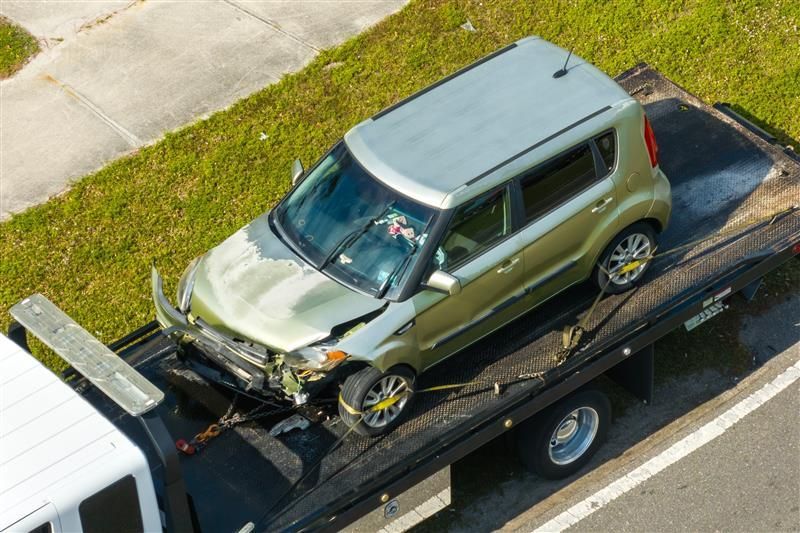
Owyhee Towing & Recovery provides vehicle recovery rotator services in Homedale for drivers and fleet operators facing accident scenes where vehicles have rolled, flipped, or landed off-road in positions that require heavy lifting and controlled rotation. You call for this service when your truck has tipped into a ditch, your sedan has rolled multiple times and landed on its side or roof, or your commercial vehicle has overturned on a curve and standard wreckers cannot safely reach or right it. The work involves positioning a rotator truck with a boom-mounted winch system capable of lifting several tons while rotating the load through a controlled arc to prevent further damage to the vehicle or the surrounding terrain.
A rotator is not a conventional tow truck. It uses a hydraulic boom that extends upward and outward, paired with a rotating underlift and multiple winch points that allow operators to lift a vehicle from unusual angles and gradually rotate it back onto its wheels or onto a flatbed. This becomes necessary when a vehicle has flipped during a highway accident, rolled down an embankment, or ended up on its side after a collision. The service addresses situations where pulling alone would drag the vehicle and cause additional frame or body damage, or where the grade and position make standard extraction unsafe for operators and bystanders.
If your vehicle is currently involved in a rollover or accident recovery scenario in Homedale, contact the team to discuss site access and equipment staging requirements.
What Rotator Recovery Involves and What Happens During the Operation
When you request rotator recovery, the operator first assesses the scene for stability, checking the ground slope, vehicle position, and any hazards such as fuel leaks, traffic proximity, or unstable embankments. Operators use rigging straps, chains, and spreader bars to distribute lifting forces evenly across the vehicle frame and avoid crushing body panels or bending suspension mounts. The rotator boom extends over or alongside the vehicle, and winches are attached at calculated points to begin the lift.
Once the lift begins, you will see the vehicle rise slowly and rotate as the boom pivots. Owyhee Towing & Recovery operators adjust boom angle and winch tension throughout the process to control the rotation and prevent sudden shifts. After the vehicle is upright and stable, it is lowered onto a flatbed or towed with an underlift, depending on the condition of the wheels and drivetrain. The result is a vehicle removed from the accident scene without additional structural damage and ready for transport to a repair facility or salvage yard.
The service does not include vehicle repair, fluid cleanup, or debris removal from the accident site. Those tasks fall to other contractors or emergency responders. Rotator recovery focuses solely on safely extracting and repositioning the vehicle so that roads can reopen and the vehicle can be moved off-site.
Rotator recovery work often follows accidents or off-road incidents, and drivers or fleet managers typically have questions about timing, equipment limits, and what the service includes.
What types of vehicles can a rotator recover?
Rotators are rated by lifting capacity and boom reach, and most can handle passenger vehicles, light trucks, box trucks, and some commercial vehicles up to a specified weight. The operator confirms whether the rotator on hand can manage your vehicle's weight and position before beginning the lift.
How long does a rotator recovery take?
Recovery time depends on vehicle position, terrain stability, rigging complexity, and whether traffic control or road closures are required. A straightforward rollover on flat ground may take an hour, while a steep embankment recovery with multiple rigging adjustments can take several hours.
When is a rotator necessary instead of a standard tow truck?
You need a rotator when the vehicle is overturned, resting on its side or roof, located on a steep grade, or wedged in a position where pulling would cause the vehicle to drag or tumble. Standard wreckers lack the boom height and rotation control required for these scenarios.
Why does rotator service cost more than regular towing?
Rotator trucks cost significantly more to purchase and maintain, require specialized operator training, and involve longer on-site time due to rigging and safety procedures. The equipment and expertise reflect the complexity and risk involved in heavy recovery work.
What happens if the vehicle is too damaged to tow normally after recovery?
Once the vehicle is upright, it is loaded onto a flatbed or towed with an underlift if the wheels and axles are intact. In Homedale and surrounding areas, operators coordinate with the vehicle owner or insurer to determine the destination, whether that is a repair shop, salvage yard, or impound lot.
Rotator recovery becomes necessary when accidents or off-road incidents leave vehicles in positions that cannot be safely addressed with standard equipment. If you need recovery support for an overturned or rolled vehicle in Homedale, reach out to discuss the specifics of your situation and arrange for equipment dispatch.
Common Questions About Rotator Recovery in Homedale